“Decoding complexity. Defining strategy. Building with purpose.”
“Ethics, Regulation, and Artificial Intelligence in Human Relationships“.
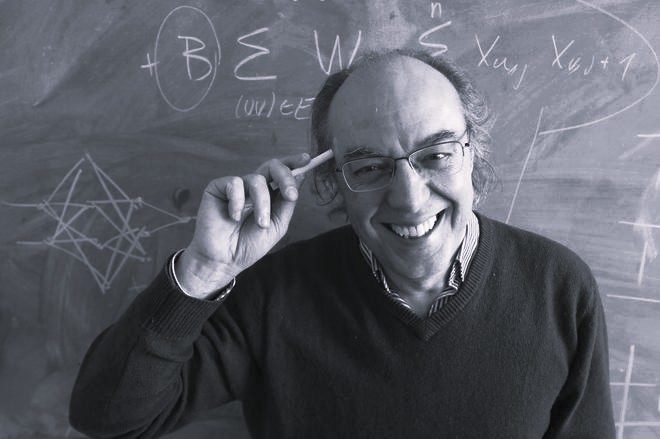
2. In-Depth Analysis: Key Takeaways from José Ignacio Latorre’s Intervention
2.1. The Singular Moment: Intellectual and Scientific Surpassing
Latorre points out that we are living in a singular moment in human history: one in which we are intellectually surpassed by our own creations.
He illustrates this paradigm shift with direct examples from scientific research, where advanced artificial intelligences, equipped with reasoning loops, are capable of structuring, developing, and concluding complex scientific articles in a matter of hours—tasks that would take a research team months.
This raises an immediate ethical dilemma regarding authorship, the value of human intellectual effort, and how elite centers must adapt their protocols to integrate this level of competence without losing moral rigor.
2.2. The Urgency of Regulation and the New Social Contract
Faced with unregulated advancement, the position is categorical: yes, we must regulate. The absence of regulatory frameworks does not foster freedom; rather, it allows the benefits of AI to be concentrated in a few corporations, impoverishing and increasing the vulnerability of the rest of society. Latorre emphasizes the need to establish critical protective regulations [cite: mm4W5Y-TNH0]:
- Protection of minors against fallacious education and unsupervised algorithms.
- Protection of our elderly against attacks, scams, and automated disinformation.
- Protection of our environment against the colonization of resources by automated systems.
It is imperative to curb accelerated application in favor of a “correct speed” that allows society to assimilate changes, educate itself, and establish appropriate laws.
“A new social and governance contract is required where technology is held accountable”.
2.3. Creativity, Symbiosis, and the “Augmented Human”
The emergence of AI in creative and analytical tasks should not plunge us into pessimism or “intellectual decadence.” Historically, the creation of stronger machines did not stop us from playing sports, nor did the invention of chess computers end the game (today it is played more than ever).
The response to being surpassed by machines is to be even more human. Latorre proposes the concept of the augmented human:
“A symbiosis where human talent and imagination (like that of a modern Michelangelo) merge with AI tools, allowing us to explore more ideas, make mistakes faster, and achieve works of a vastly superior level“”.
2.4. The Emotional Dimension: Intimacy, Bonds, and the New Loneliness
One of the most profound challenges is the impact of AI on intimacy and emotional health. Currently, the main queries to language models revolve around health and love: This generates a scenario of lights and shadows:
- The Risk: Young people (especially adolescents) are using immature AI as their main emotional confidant, which poses a serious danger due to the lack of regulation: There is also the risk that people isolate themselves in their homes, preferring the complacency of an artificial companion that avoids the natural friction of human relationships.
- The Opportunity: For vulnerable populations or those in unwanted loneliness (such as the very elderly), AI can act as a patient witness to their lives, an external memory, and invaluable company.
- Furthermore, Latorre suggests that AI could become a “modern matchmaker,” crossing profiles of millions of users to create much more akin and authentic human connections, overcoming the aesthetic prejudices of current platforms.
3. Detailed Profile of the Speaker
| Name | José Ignacio Latorre |
| Area of Expertise | Theoretical physics, quantum mechanics, artificial intelligence, and computing |
| Current Position | Director of the Centre for Quantum Technologies in Singapore (leading a team of 340 people and over 20 principal investigators in building quantum computers) |
| Vision | Defender of the “temperate zone”: approaching technology and science without prejudice, listening actively, and prioritizing understanding over fear or polarization. |
4. Multimedia Resources
5. Strategic Vision from the AI Direction (CAIO) for HumanCentric
As part of the executive team at HumanCentric, and from my position as Chief Artificial Intelligence Officer, Latorre’s vision consolidates the foundations of our work.
For us, applying AI is not just about implementing technology; it is about redesigning human processes. I extract these major operational lessons that we must apply with all our corporate clients:
- Adopt the Corporate “Temperate Zone”: Latorre insists on fleeing from extremes (technological panic or blind techno-optimism). We must be the facilitators of that temperate zone for the companies we advise, helping them understand technology holistically, without prejudice, so they can integrate analytical tools by losing fear and gaining comprehension.
- Preserve the Ethical and Organizational “Muscle”: Latorre warns that if we delegate all decision-making, humans will suffer an “ethical decline” and lose the ability to understand problems globally. Our consulting at HumanCentric must ensure that, even as we automate analytical tasks for our clients, the sovereignty of the decision, empathy, and final responsibility always rest with trained and conscious teams.
- Governance as a Non-Negotiable Axis: Just as Latorre’s Quantum Center implemented immediate rules facing the emergence of advanced models (such as requiring that no research is published without human review), we must incorporate governance audits into every solution we deploy. Ethics must be in the architecture of our systems, protecting both the data and the internal dynamics of any type of corporate client that trusts us.
6. Biography and Sources
Speaker Biography
José Ignacio Latorre is an internationally recognized Spanish theoretical physicist, researcher, and science communicator. Born in Barcelona in 1959, he holds a Ph.D. in Quantum Chromodynamics and has conducted postdoctoral research at MIT and the Niels Bohr Institute.
He is a leading expert in quantum mechanics and artificial intelligence. Currently, he serves as the Director of the Centre for Quantum Technologies in Singapore, overseeing a large team dedicated to building quantum computers.
He is renowned for his work in exploring how technologies like AI and quantum computing will transform our lives and advocates for a regulated, human-centric approach to technological advancement.
Sources
- Video Production: The analyzed video intervention is part of the Aprendemos Juntos initiative, a project produced by BBVA to give voice to brilliant minds and inspire societal progress through education and reflection.4
- Speaker Affiliations: Centre for Quantum Technologies (Director); University of Barcelona (Professor); CERN (former researcher).
Published by “The Human-Centric Team and Aritz“.
 Human-Centric
Leave a comment